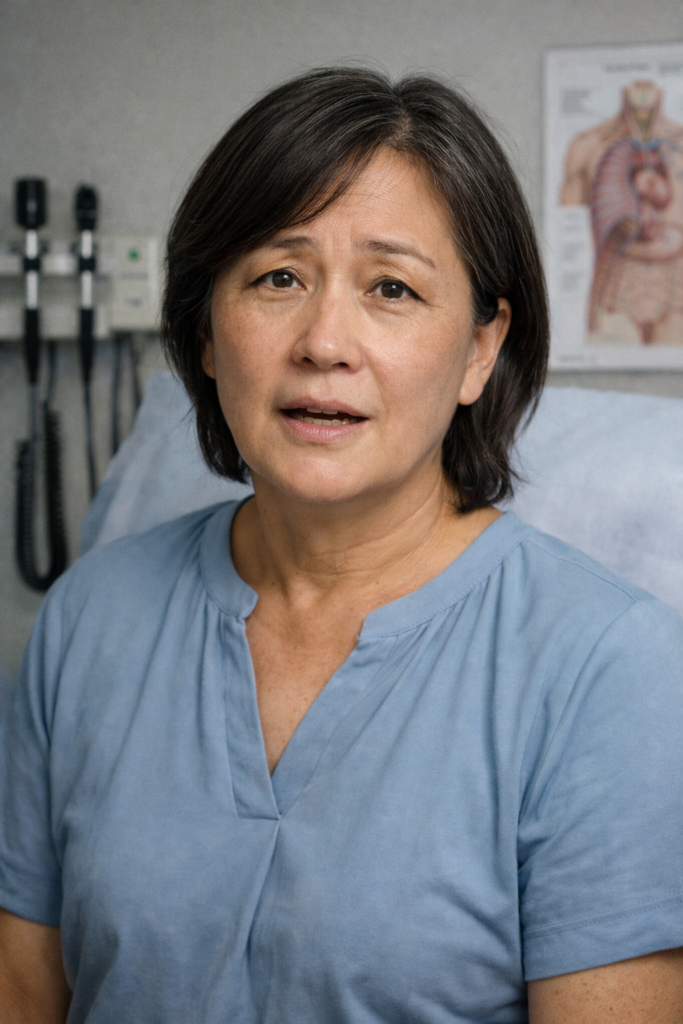
During Shadow Health Simulation test, effective patient interviews lead to provision of quality care by the nurse at the tail end of the Simulation. Following the Simulation of Esther Park, a 78-year-old patient presenting with abdominal pain, tips noted to achieve mastery during interviews will be discussed in this clinical essay.
Tips for Conducting Adult Patient Interviews.
- Use a combination of open and closed questions: Begin your interview broadly by letting the patient describe their concerns in their own words to reveal their priorities and closed questions to determine specific subjective data. For instance, during the assessment of Esther Park, you can ask, “How would you describe your pain?” followed by, “On a scale of 0-10, how severe is your pain?” These two questions indicate open and closed question format that enables the patient to give clear answers that can be easily documented and interpreted.
- Use Therapeutic Communication: Always show empathy to acknowledge discomfort presented by the patient, validate concerns and provide education to the patient where need be. For instance, during the assessment of Esther Park, you can show empathy by saying; “I’m sorry you’re experiencing that pain” after the patient has expressed that she is pain.
- Focus on Patient-Centered Care: Explore the patient’s concerns and expectations to enable you to address agendas and priorities of the patient. Older patients might tend to hold back on their symptoms, “I don’t like to complain”, hence it’s important to allow them to speak at their own pace. This allows the nurse to collect all the necessary subjective data for diagnoses and care plan at the end of the Simulation test.
- Employ Active Listening: Make sure you always pay attention to the patient’s verbal and non-verbal cues clarifying their statements. This helps the nurse make sure they don’t miss on follow-up questions and detailed documentation of the patient data thus leading to proper care plan.
- Be Culturally Sensitive and Provide Education: When interviewing the patient, always take the opportunities to offer education to your patient and respect their various cultural aspects when applicable. For instance, when Esther Park states that she doesn’t know the quantity of her fiber intake. It is necessary to education her on the need to increase her fiber intake and hydration to prevent constipation.
By following the practices discussed above during the Simulation test, the student nurse is able to maximize on their score and practice clinical skills necessary in real-world encounters such as accurate diagnosis (in this case, likely constipation) and patient-centered care.