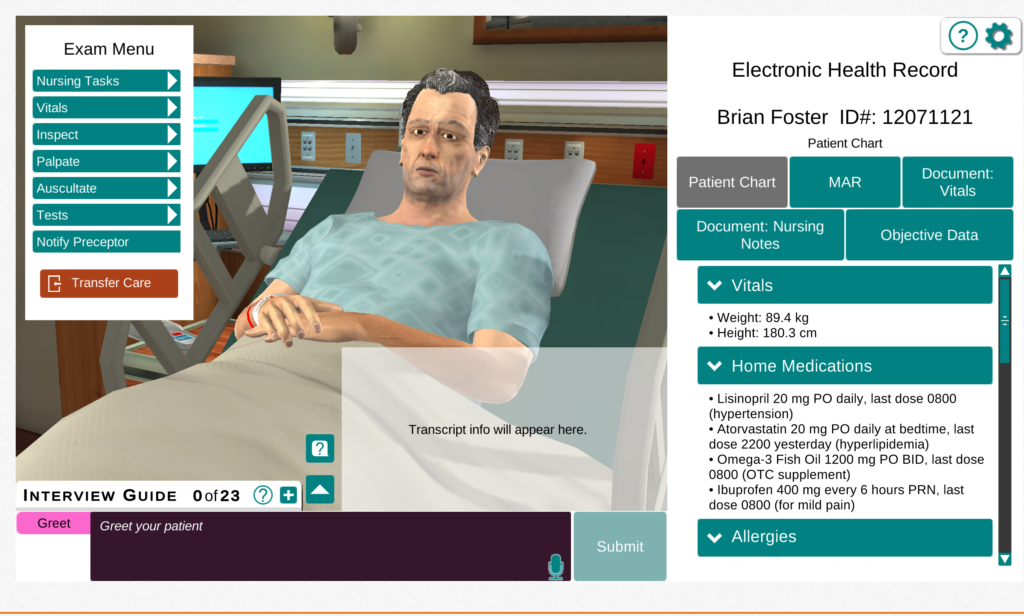
The Chest Pain Shadow Health Focused Exam with Brian Foster is one of the most useful simulations for nursing students who are practicing their cardiovascular assessment skills and clinical reasoning. Brian Foster is a 58-year-old male who underwent a recent surgery and had episodic central chest pressure in the last month. The pain is usually exertional, induced by such activities as walking up the steps, and it may vary in intensity between 6 and 10; however, it disappears after a couple of minutes of rest. The case presents nurses with the challenge of differentiating potentially life-threatening cardiac ischemia and other etiologies in a systemized manner, as well as combining detailed subjective and objective data.
Clinical reasoning in this case should start with a comprehensive patient history, preferably with the use of systematic approaches such as OLDCARTS. The dialogue should be started with open-ended questions, as nurses need to give Mr. Foster an opportunity to explain the chest pain in his words before making inquiries about the particular features. The most important information is the latest onset within the last month, focus in the middle, presence of radiation to the arm, and consistent exacerbation of physical activity with constant relief after rest.
Even though he denies the related shortness of breath, nausea, or diaphoresis in the present attacks, considering such cardiovascular risk factors as hypertension, hyperlipidemia, sedentary lifestyle, and family history of heart disease reinforces the clinical picture. Other high-yield questions that are frequently ignored are previous experience of angina or evidence of fever or pulmonary embolism risk.
Objective analysis demonstrates minor but important results that provide cardiac insights. There are also some significant abnormalities, such as a point of maximal impulse (PMI) displaced and an audible S4 gallop, which means that the ventricles are stiff. Nurses will be required to conduct a meticulous examination of jugular venous distention, palpation of peripheral pulses and cardiac sounds, carotids, abdomen, and lung sounds. Reporting negative results is also crucial to a full evaluation.
All the facts combined, the discomfort during exercising, the existence of an S4 gallop, and the identification of some risk factors are strong indicators of stable angina as a result of the coronary artery disease. Differential diagnoses like peptic ulcer disease, cardiac tamponade, musculoskeletal strain, or anxiety should be in the list of things that should not be ignored, but it is always better to eliminate life-threatening causes.
Proper documentation requires using the SOAP format to capture detailed information about the patient’s subjective pain, objective evidence of disease, a focused examination of the likelihood of angina, and an evidence-based action plan that includes an ECG, a potential stress test, nitroglycerin if necessary, and patient education on lifestyle changes. The nurses need to be able to obtain top ratings by attempting to gather full data, show empathy during the interaction, offer specific education on cardiac diet and exercise, and create a proper care plan with referrals, where necessary.
The learning experience from the Brian Foster simulation on chest pain provides essential foundational skills for assessing the cardiovascular system and making clinical decisions. Practice sharpens questioning, physical examination, and therapeutic communication skills, which are directly applicable to the provision of patient protection in real clinical practice. These skills are essential for healthcare professionals to effectively assess and manage patients with chest pain, ensuring accurate diagnosis and appropriate treatment. The simulation provides a safe environment for learners to practice these skills and receive feedback to improve their clinical performance and boost their professionalism in the medical market
For more articles about shadow health, you can visit our website at Taic Research Using the following link: https://taicresearch.com/articles/
References
CDC – Pediatric Assessment: https://www.cdc.gov
MedlinePlus – Abdominal Pain: https://medlineplus.gov
NANDA International: https://www.nanda.org
Shadow Health Health Assessment Digital Clinical ExperiencesTM for undergraduate nursing students. (n.d.). www.elsevier.com. https://www.elsevier.com/products/shadow-health/health-assessment