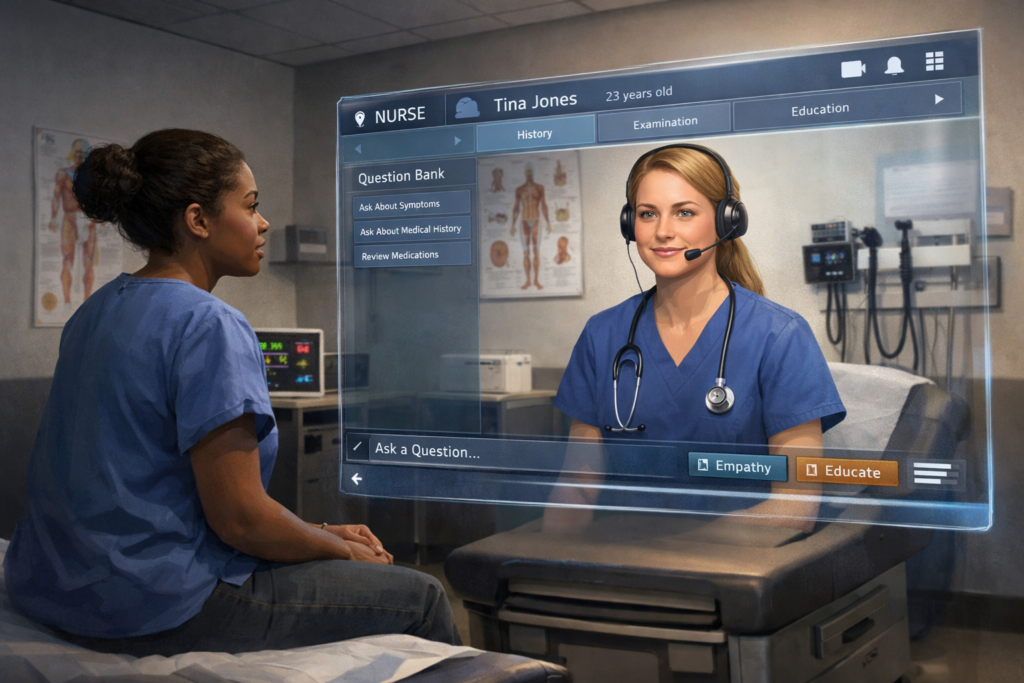
During Shadow Health Simulation, it is common for nursing students to miss on some points due to a number of factors. To avoid this, points noted to achieve high scores during the digital clinical experience of Tina Jones such as proper documentation, and complete data collection will be discussed in this clinical article.
- Missing Key Objective Data During Shadow Health Physical Assessment.
Always follow a systemic head-to -toe approach while assessing the patients. This helps to avoid mixing data that might cause confusion during diagnoses and care plan at the tail end of the Simulation. The student nurse should be thorough during system assessment such as listening for abnormal sounds like wheezing in the respiratory system.
- Rushed Subjective Data Collection in Shadow Health Simulation
Skipping asking key follow-up questions or not exploring symptoms thoroughly should also be avoided. For instance, not asking about the onset, severity, aggravating factors, and associated symptoms for asthma, diabetes or foot wound. To avoid this, the nurse should be systematic in her approach. This can be done by covering symptoms one by one.Remember to always ask about family history, socioeconomic history, medications, allergies, and risk factors such as smoking and exercise.
- Poor Documentation in Shadow Health Notes
During the Simulation, the nurse should avoid using vague language to document findings such as normal instead of listing the specific findings. This can be avoided by using precise, professional terms, for instance, bilateral wheezes on auscultation or bilateral air entry and S1 S2 noted on auscultation. Make sure to include all the relevant positives/negatives findings noted during the Simulation test.
- Lack of Empathy, Education, and Patient-Centered Care During Shadow Health Simulation.
It is important to remember to educate the patient on her conditions .How to monitor and control her blood sugar. Always respond empathetically to emotional cues, for instance, show grief over the death of the father. “I’m sorry for the loss of your father.”
Tips for Shadow Health Simulation Success.
- Practice multiple times to build confidence.
- Be thorough during subjective/objective data collection to avoid missing important points.
- Use clear communication by using language familiar to the patient and medical terms in notes.
- Use shadow health resources like transcripts for reference to ascertain on areas to improve on.
Conclusion.
When the student nurse focuses on thoroughness, empathy and precision, they can minimize errors and achieve high scores during the Simulation test. This helps the student nurse build clinical judgement skills that are necessary during real patient encounters.
For more Shadow Health articles, visit our website at TAIC research https://taicresearch.com/articles/
References.
Centers for Disease Control and Prevention. (n.d.). CDC. https://www.cdc.gov/
MedlinePlus. (n.d.). MedlinePlus – Health Information from the National Library of Medicine. https://medlineplus.gov/
NANDA International, Inc. (2025, October 14). NANDA International, Inc | Home. NANDA International, Inc |. https://www.nanda.org/ Shadow Health Health Assessment Digital Clinical ExperiencesTM for undergraduate nursing students. www.elsevier.com. https://www.elsevier.com/products/shadow-health/health-assessment