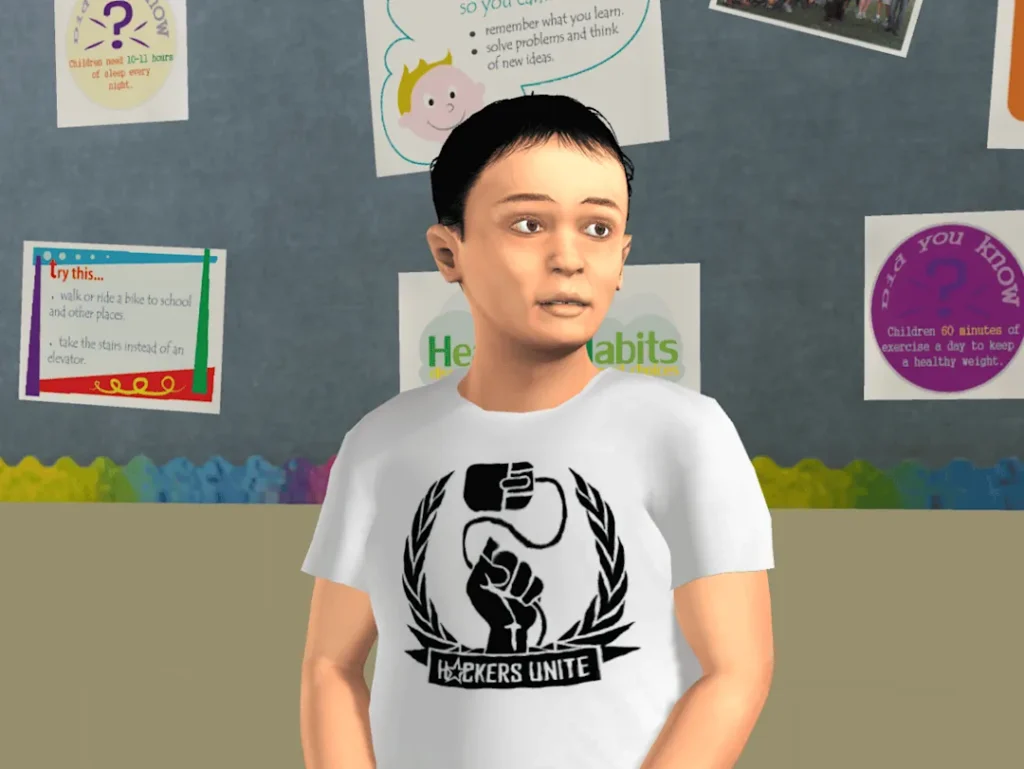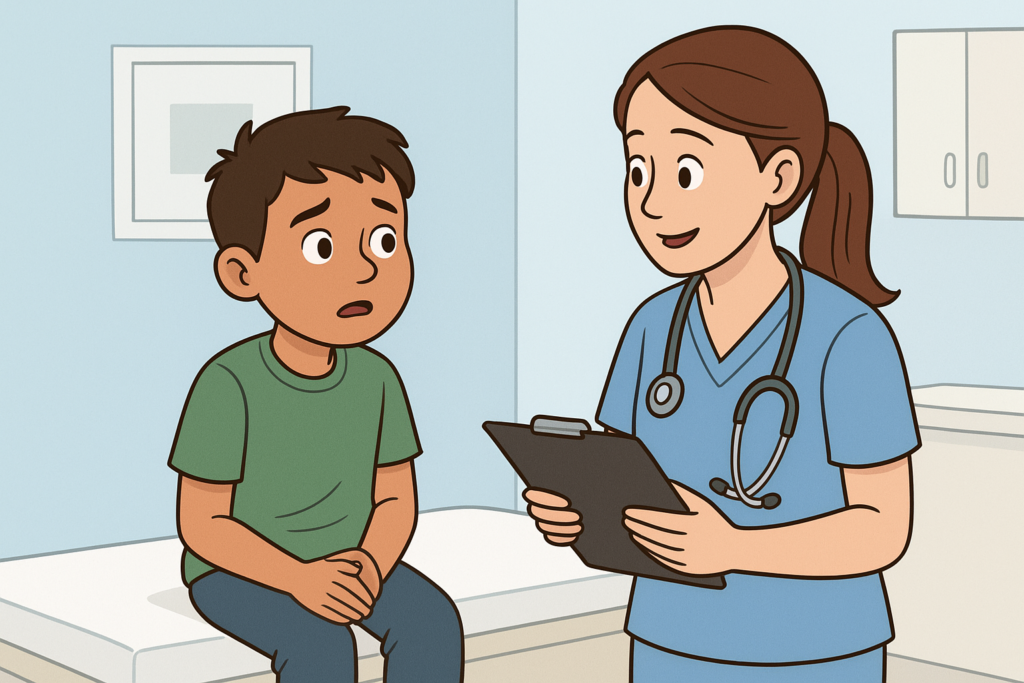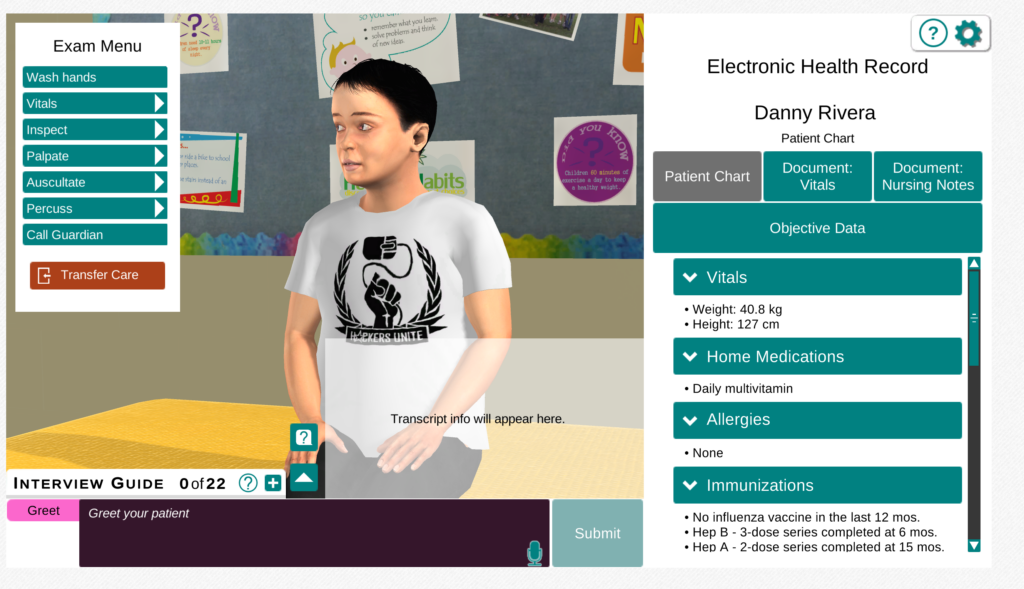
The simulation underscores the need to have effective communication with the pediatric patient as well as the family members surrounding the patient when conducting tests. Here, we have an 8-year-old male patient, Danny Rivera, who has been complaining of a cough of a persistent nature, and his primary caregiver is his grandmother, the one who has been his main caregiver and source of information in that she, in this context, is the parent/guardian who needs to be fully enabled in carrying out pediatric exams. Effective communication starts with establishing rapport with the child with courtesy to involve the adult. Greet Danny, and take your time to listen to him at his developmental level, speaking in straightforward language and allowing open-ended questions to get him to engage, like asking how the cough is or how it is affecting school and play. At the same time, recognize the presence and experience of the grandmother and appreciate her bringing him up, and seek input early enough to gain trust. Such a two-way strategy makes the child empowered and at the same time, acknowledges the important role of the guardian in presenting the correct history and following up.
In the collection of the subjective data, alternate the right questions between Danny and her grandmother, making sure you ask the right and direct questions to score maximum points. Inquire of the child concerning symptoms that he has directly, which may include cough symptoms, ear pain, and runny nose, and verify the length, severity, exposures, and previous illnesses with the grandmother. Phrases like “Danny says the cough is gurgly. Can you tell me when you first noticed it?” Bridge both perspectives and validate the child’s voice. Address potential discrepancies gently without undermining either party. Lastly, empathy and education are some of the extensions of therapeutic communication. Demonstrate cognition of the effect of the disease on the sleep patterns and the daily activities of Danny. Clarify culturally competent education about hand hygiene, cough etiquette, hydration, and secondhand smoke avoidance, explaining things to them based on their level of understanding and incorporating Danny into age-specific activities. The case study of Danny Rivera Shadow Health cough provides nurses with insight to communicate with the parents during pediatric exams and opportunities to develop collaborative partnerships that result in the best child health outcomes.
For more articles about the same you can checkout our website: https://taicresearch.com/articles/
Reference
Shadow Health Health Assessment Digital Clinical ExperiencesTM for undergraduate nursing students. (n.d.). www.elsevier.com. https://www.elsevier.com/products/shadow-health/health-assessment